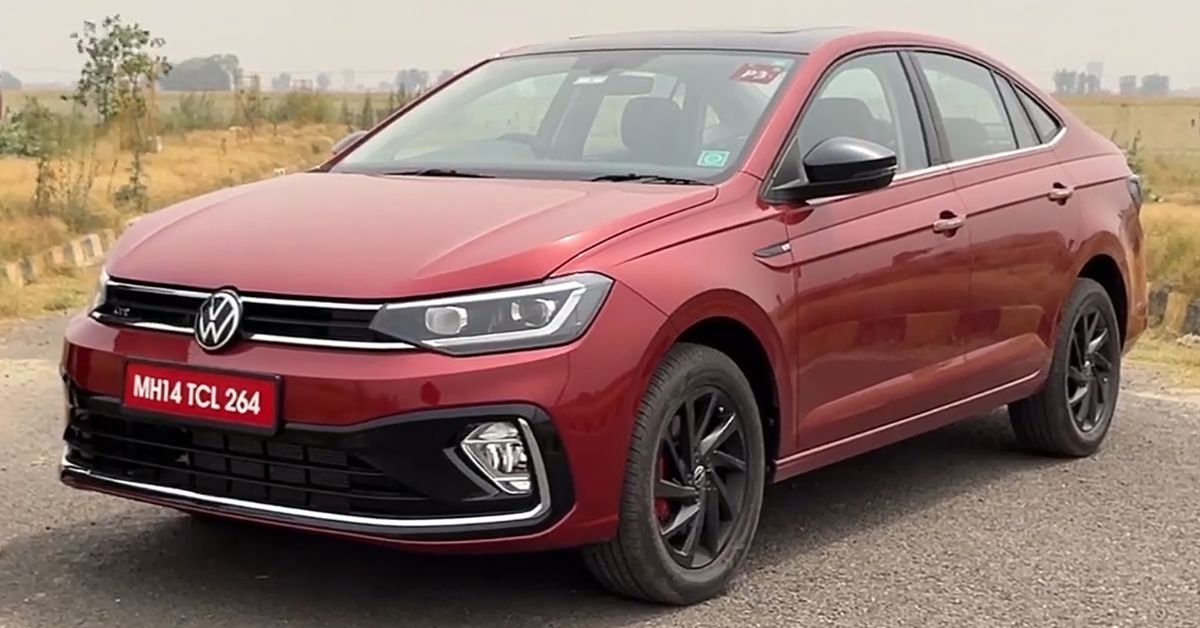
If you’ve been cross-shopping sedans and keep coming back to the same question why does everyone who owns a Virtus talk about it differently than they talk about a Verna or a City you’re about to find out. The 2026 Volkswagen Virtus isn’t the loudest car in its segment, but it might be the most honestly engineered one.
Volkswagen doesn’t chase spec-sheet wars the way some of its rivals do. Instead, the Virtus leans on something harder to fake: how it actually feels to drive. For 2026, that formula hasn’t changed much, and that’s arguably the point.
A Quick Recap: What Is the Volkswagen Virtus?
Launched in 2022 as the replacement for the ageing Vento, the Volkswagen Virtus is built on the MQB-A0-IN platform the same underpinnings shared with the Skoda Slavia. It was designed specifically for Indian roads under Volkswagen’s India 2.0 project, which means it isn’t a watered-down European car; it’s engineered here, for here, while retaining the brand’s European driving character.
Fast forward to 2026, and the Virtus continues to compete directly with the Hyundai Verna, Honda City, and its own cousin, the Skoda Slavia all without an EV or hybrid variant, staying true to its turbo-petrol-only identity.
2026 Volkswagen Virtus Price in India
The 2026 Volkswagen Virtus price in India starts at approximately ₹10.71 lakh ex-showroom for the base Comfortline trim and goes up to around ₹19.20 lakh for the fully-loaded GT Plus Sport DSG variant.
Here’s a rough breakdown by trim level:
- Comfortline (1.0 TSI, MT): ₹10.71 lakh
- Highline (1.0 TSI, MT/AT): ₹13 – 15 lakh
- Topline (1.0 TSI, AT): ₹15 – 16.5 lakh
- GT (1.5 TSI, DSG): ₹17 – 18 lakh
- GT Plus Sport / Anniversary Edition (1.5 TSI, DSG): ₹18.5 – 19.2 lakh
On-road prices, once you factor in RTO charges, insurance, and TCS, typically run about 14% higher than the ex-showroom figure. In a city like Delhi, that pushes the range to roughly ₹12.3 lakh to ₹22 lakh on-road. Prices will naturally shift a bit city to city depending on local road tax, so it’s worth checking with your nearest dealership for an exact quote.
Engine, Power & Key Specifications
This is where the Virtus genuinely separates itself from the segment. Volkswagen offers two turbo-petrol engines, and both are tuned for spirited driving rather than just fuel-economy bragging rights.
| Spec | 1.0 TSI | 1.5 TSI EVO |
|---|---|---|
| Displacement | 999 cc | 1498 cc |
| Power | 115 PS | 150 PS |
| Torque | 178 Nm | 250 Nm |
| Transmission | 6-speed MT / 6-speed Torque Converter AT | 6-speed MT / 7-speed DSG |
| Mileage (ARAI) | 19-20.8 kmpl | 18.45 kmpl |
| Ground Clearance | 179 mm | 179 mm |
| Seating Capacity | 5 | 5 |
| Drive Type | FWD | FWD |
| Boot Space | 521 litres | 521 litres |
The 179 mm ground clearance is a genuinely useful number for Indian roads it handles moderate speed breakers and broken patches without the constant scraping worry that plagues some lower European-derived sedans.
The 1.5 TSI with the DSG gearbox is the one enthusiasts talk about, and for good reason. It doesn’t just accelerate quickly; it stays composed at triple-digit speeds, something that’s genuinely rare in this price bracket in India.
Interior, Features & Comfort
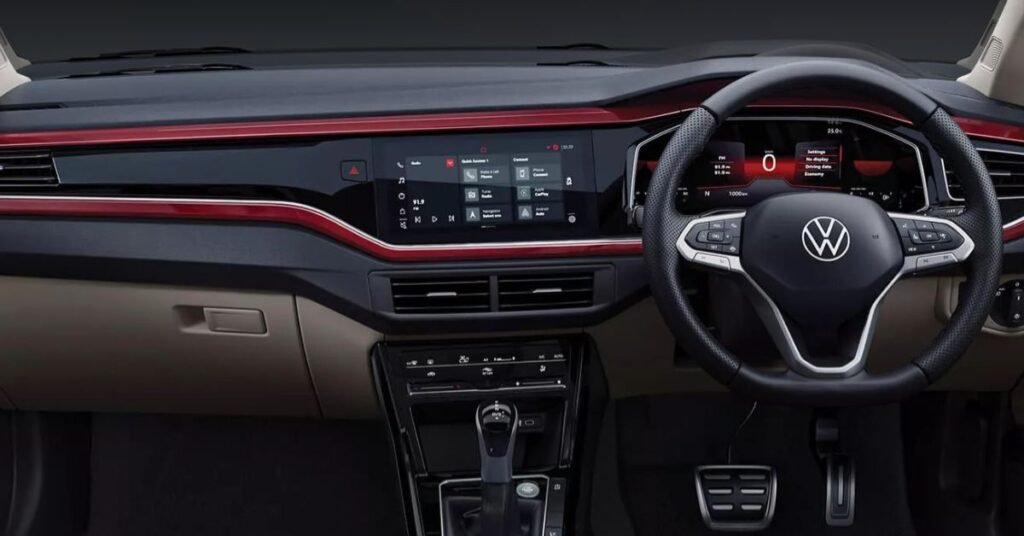
Step inside and the Virtus doesn’t try to overwhelm you with screens and gimmicks. What you do get across the higher trims includes:
- 10.1-inch touchscreen infotainment system
- 8-inch fully digital driver’s display
- Ventilated and powered front seats
- Single-pane sunroof
- Wireless phone charging
- 8-speaker sound system
- Rear AC vents with auto climate control
The cabin uses a dual-tone theme with leatherette upholstery, and while some reviewers point out the extensive use of hard plastics compared to rivals, the fit and finish still feels a notch above what you’d expect at this price. Rear seat space is generous enough for a 6-footer to sit behind another 6-footer without complaints.
Safety: Where the Virtus Genuinely Leads
The Volkswagen Virtus carries a 5-star Global NCAP safety rating, which remains one of its strongest selling points. Standard and available safety features include:
- Multi-collision braking (MCB)
- Electronic differential lock (XDS)
- Anti-slip regulation (ASR)
- Tyre pressure deflation warning
- Up to 6 airbags on higher variants
- Engine immobiliser with floating code
For 2026, Volkswagen is also expected to roll out ADAS as part of a mid-cycle update, which would bring it in line with rivals that already offer lane-keep assist and adaptive cruise control.
2026 Volkswagen Virtus vs Rivals: How Does It Compare?
If you’re cross-shopping, here’s the honest picture:
- vs Hyundai Verna: The Verna wins on features and cabin tech but the Virtus wins on driving dynamics and build solidity.
- vs Honda City: The City is smoother and more reliable on paper but feels less engaging to drive than the Virtus, especially the 1.5 TSI.
- vs Skoda Slavia: Nearly identical underneath, but the Virtus tends to have marginally better resale value and a wider service network in most cities.
If daily comfort and long-term ownership peace of mind matter most to you, the Verna or City might edge ahead. But if you actually enjoy driving, the Virtus is hard to beat under ₹20 lakh.
Should You Buy the 2026 Volkswagen Virtus?
The Virtus makes the most sense for buyers who see their car as more than a box that moves them from point A to B. If you value how a car feels on a highway stretch, how it handles a sudden lane change, or how planted it feels at 100 km/h, the extra thought you put into this choice will pay off every single day you drive it.
It’s a slightly less showroom flashy choice than some rivals, but it rewards owners who actually spend time behind the wheel rather than just showing off the spec sheet to friends.
FAQ
What is the on-road price of the 2026 Volkswagen Virtus in Delhi?
It ranges from approximately ₹12.3 lakh to ₹22 lakh depending on the variant chosen.
Which engine should I choose 1.0 TSI or 1.5 TSI?
The 1.0 TSI suits city driving and everyday commuting with better fuel economy, while the 1.5 TSI DSG is ideal if you frequently drive on highways or simply enjoy a more spirited drive.
Does the Volkswagen Virtus have a sunroof?
Yes, higher variants come equipped with a single-pane sunroof.
Is the Volkswagen Virtus good for Indian road conditions?
Yes. With 179 mm of ground clearance and a chassis tuned specifically for India, it handles broken roads and speed breakers comfortably.
Will the 2026 Virtus get ADAS?
Volkswagen is expected to introduce ADAS as part of a facelift, likely arriving later in 2026.
Final Verdict
The 2026 Volkswagen Virtus continues to hold its own in a crowded mid-size sedan segment, not by overwhelming buyers with features, but by getting the fundamentals engine response, handling, and build quality genuinely right. With prices ranging from around ₹10.71 lakh to ₹19.20 lakh ex-showroom, it sits competitively against the Verna, City, and Slavia, while offering one of the most engaging driving experiences you’ll find at this price point in India. If a satisfying drive matters as much to you as the spec sheet, the Virtus deserves a serious test drive before you sign on any dotted line.
Read More:-