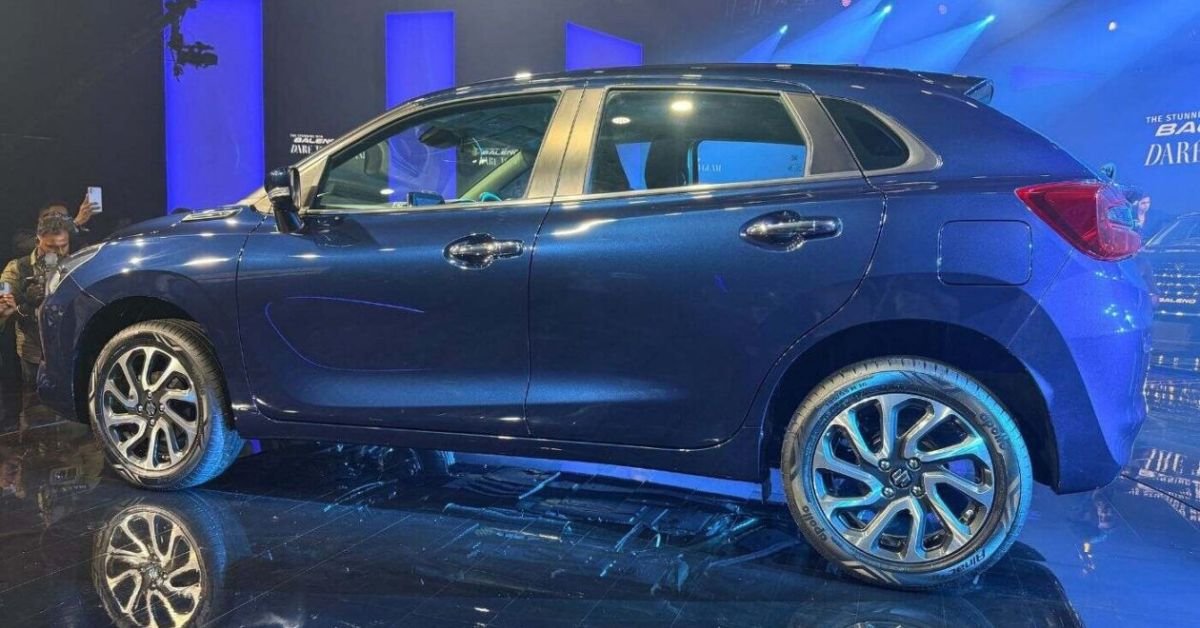
Maruti Suzuki just gave one of India’s best-selling premium hatchbacks a proper mid-life makeover, and honestly it’s more than just a fresh coat of paint. The Maruti Suzuki Baleno Facelift 2026 has officially arrived, and it brings a new engine, segment-first tech, and a price tag that still keeps it firmly in value for money territory. If you’ve been eyeing the Baleno as your next family car or daily commuter, here’s everything worth knowing before you head to the showroom.
Maruti Suzuki Baleno Facelift 2026: Launch and Price in India
The Maruti Suzuki Baleno Facelift 2026 was launched on September 5, 2026, with an introductory ex-showroom price starting at ₹6.10 lakh for the base Sigma petrol-manual variant. Depending on the trim and transmission you pick, prices go up to around ₹9.37 lakh, ex-showroom. The car is sold across four trims Sigma, Delta, Zeta, and Alpha through Maruti’s NEXA dealership network.
Given that the outgoing Baleno was already a strong seller in the premium hatchback space, this pricing keeps the facelift competitive against rivals without pushing existing customers into a different budget bracket altogether.
What’s New Under the Hood
Here’s the biggest talking point of this update: Maruti has dropped the older 1.2-litre four-cylinder K12N engine and replaced it with the newer 1.2-litre Z-Series three-cylinder petrol unit the same engine family used in the Swift and Dzire. It’s tuned specifically for the Baleno to deliver better low-end torque, which should make city driving feel a bit more responsive.
Power figures land around 83bhp and 112Nm on petrol, paired with either a 5-speed manual or a 5-speed AMT gearbox. For CNG buyers, Maruti has done something it’s never done before on any of its models offered a factory-fitted CNG option with an AMT gearbox. Until now, CNG cars from Maruti were manual-only, so this is genuinely a segment-first move. In CNG mode, output drops to roughly 70bhp and 102Nm, which is expected given how CNG powertrains typically behave.
Design Changes: What’s Different on the Outside
Don’t expect a dramatic transformation here Maruti has kept things subtle. The front grille is now noticeably bigger finished with black horizontal slats that give the face a slightly bolder look. The bumper has been mildly reworked too with redesigned fog lamp housings.
The boomerang-shaped LED daytime running lights and the headlamp cluster remain unchanged from the outgoing model, so if you liked that signature look, it’s still very much there. The 16-inch alloy wheels get a fresh design, and there’s a new shark-fin antenna at the rear. Dimensions haven’t changed at all the car is still 3,990mm long with a 2,520mm wheelbase, so practicality and boot space remain exactly as before.
Interior and Features
Step inside, and the layout will feel familiar to anyone who’s sat in the current Baleno. The 9-inch touchscreen infotainment system carries over, as does the semi-digital instrument cluster with analogue dials and a colour multi-info display in between.
What’s genuinely new this time around:
- Ventilated front seats:- a first for the Baleno, and honestly a welcome addition given how brutal Indian summers can get
- Tyre Pressure Monitoring System TPMS:- now standard, adding a layer of everyday safety
- Level 2 ADAS suite:- including adaptive cruise control, lane-keep assist, automatic emergency braking, and high-beam assist. This is a big deal because none of the Baleno’s direct rivals currently offer ADAS at this level
- A refreshed sound system from Clarion
Features carried over from before include a wireless charging pad, head-up display, automatic climate control with physical buttons no annoying touch-panel AC controls here, height-adjustable driver seat, and a 360-degree camera. Six airbags and ABS with EBD continue as standard safety fitments across the range.
One thing to note Maruti has still not added a sunroof or a rear centre armrest, both of which buyers in this segment often ask for. If those matter to you, it’s worth cross-checking rivals before deciding.
How Does It Compare to Rivals?
The Baleno Facelift 2026 continues to go up against the Hyundai i20, Tata Altroz, and Toyota Glanza in the premium hatchback space. Where it pulls ahead is the combination of Level 2 ADAS and a CNG-AMT option something none of these competitors currently match. For buyers who want the running-cost benefits of CNG without giving up the convenience of an automatic gearbox the new Baleno is arguably the only option on the table right now.
That said, if a sunroof or a more premium cabin feel is high on your priority list, it’s worth taking a test drive of the i20 or Altroz before finalising your decision.
Should You Buy the New Baleno?
For city dwellers and small families looking for a fuel-efficient, feature-loaded hatchback the Maruti Suzuki Baleno Facelift 2026 makes a strong case for itself. The updated engine, added safety tech, and the practicality of CNG-AMT are meaningful upgrades rather than cosmetic gimmicks. It’s not a radical reinvention, but then again, it didn’t need to be the Baleno was already doing well in its segment.
FAQ
What is the price of the Maruti Suzuki Baleno Facelift 2026 in India?
The Maruti Suzuki Baleno Facelift 2026 starts at an introductory ex-showroom price of ₹6.10 lakh and goes up to approximately ₹9.37 lakh for the top-spec variant.
What engine does the new Baleno facelift use?
It uses a new 1.2-litre Z-Series three-cylinder petrol engine producing around 83bhp and 112Nm, available with a 5-speed manual or 5-speed AMT gearbox.
Does the Baleno Facelift 2026 come with a CNG option?
Yes, and for the first time ever on a Maruti Suzuki car, the CNG version is available with an AMT gearbox in addition to the manual option.
Does the new Baleno get a sunroof?
No, the Maruti Suzuki Baleno Facelift 2026 still does not offer a sunroof, even on the top-spec Alpha trim.
What safety features does the Baleno facelift offer?
It comes with a Level 2 ADAS suite adaptive cruise control, lane-keep assist, auto emergency braking, six airbags, ABS with EBD, a 360-degree camera, and a tyre pressure monitoring system.
Final Thoughts
The Maruti Suzuki Baleno Facelift 2026 sticks to a simple formula keep what worked fix what didn’t and add features that actually matter to Indian buyers. With a fresh engine, genuine safety upgrades, and a first-of-its-kind CNG-AMT combination, it’s a sensible update rather than a flashy one. For anyone shopping in the premium hatchback segment, this facelift deserves a spot on your test-drive list.
Read More:-